Sewage Backup: What to Do First
A sewage backup is unpleasant, but the first hour comes down to a few plain steps: stop adding water, keep people away and make the right calls.
Stop using water and do not flush. Keep children and pets out, do not touch sewage with bare hands, and turn off power to the area if water could reach wiring and it is safe to do so. Call the sewer authority or a plumber to stop the source, then your insurer and a cleanup provider. Photograph the damage before anything is moved.
Stop the water and keep people out
Do not flush toilets, and avoid running taps and appliances that drain into the same system until the cause is known. Keep children and pets away from the affected area. Public-health guidance is to wear rubber gloves when handling anything contaminated, never to touch raw sewage with bare hands and to wash hands immediately afterwards.
Stay safe around electricity
The same guidance says to turn off the power if there is standing water or a chance of wiring coming into contact with water or wet materials. Do not walk through standing water to reach a panel; if it cannot be reached safely, call the utility or an electrician.
Central heating and air-conditioning blowers should be used only if wastewater did not get into the ducts.
Make the calls in order
- The sewer authority, if the property is on a public sewer, or a plumber, to find and stop the source
- The local health department for advice, if the property has a septic system
- Your insurer, to report the damage and ask what the policy covers
- A cleanup provider, for an assessment of the affected area
Stopping the source and cleaning the property are separate jobs. Be clear about who is doing each.
Document before anything is moved
Photograph each affected room and the marks left by the water, and list damaged items before they are removed. The guidance recommends pictures and a list of discarded items for insurance purposes.
Know what cleaning can and cannot save
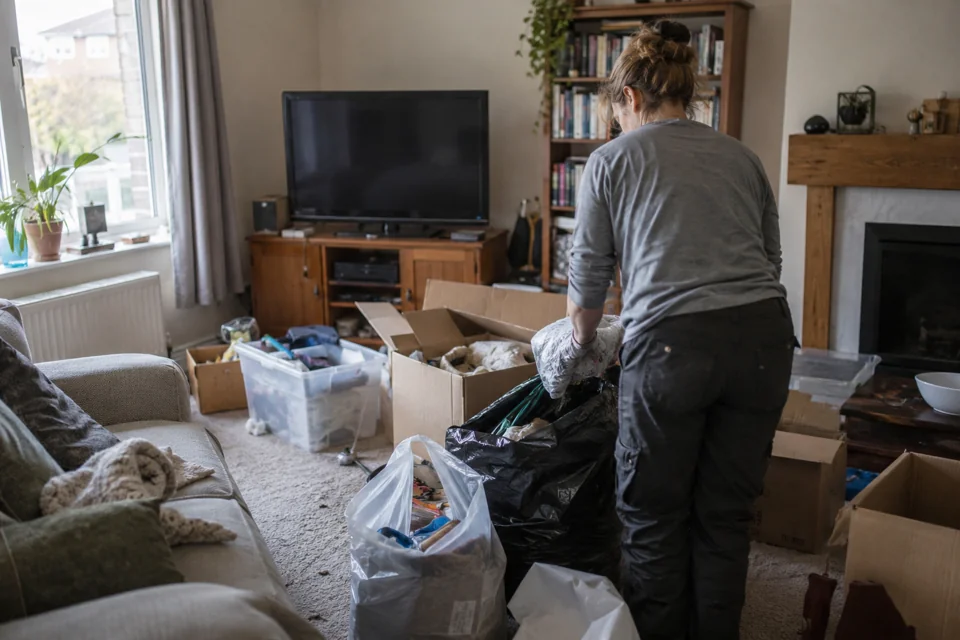
Public-health guidance is to discard porous materials contaminated by sewage, including carpets and pads, upholstered furniture, mattresses, cardboard and affected wallboard, and to wash and then disinfect hard surfaces. The risk of illness increases the longer sewage stays in contact with the interior, so drying and removal should not be delayed.
The same guidance favors professional cleanup where sewage has been in a finished living space for more than 24 hours, where ductwork is contaminated or where the job is too large to handle yourself.
Black Ops Cleaning offers a free on-site assessment for sewage backup cleanup and sets out the scope in writing, with drying, plumbing and repairs identified separately.
Your planning checklist.
- Whether the source has been stopped, and by whom
- Rooms affected and their floor and wall finishes
- How long the water was present
- Photographs and a list of damaged items
- Insurer contact and claim reference
- Any contact with heating or air-conditioning ducts
Stop the source, protect people, then plan the cleanup. In that order.
Questions people ask.
What should I do first after a sewage backup?
Stop using water and do not flush. Keep children and pets out, avoid touching sewage with bare hands, and turn off power to the area if water could reach wiring and it is safe to do so. Then call the sewer authority or a plumber, your insurer and a cleanup provider.
Can carpet be saved after a sewage backup?
Public-health guidance is to discard carpets, carpet pads and other porous materials contaminated by sewage, because they are difficult to clean. Hard surfaces can usually be washed, disinfected and dried.
Is it safe to clean up a sewage backup yourself?
Public-health guidance allows for it with protective eyewear, gloves and boots and careful hand washing, but favors professional cleanup when sewage has been in a finished living space for more than 24 hours, when ductwork is contaminated or when the job is large.
Put the plan into practice.
Explore the relevant service, then tell us about the property and the work you want to discuss.