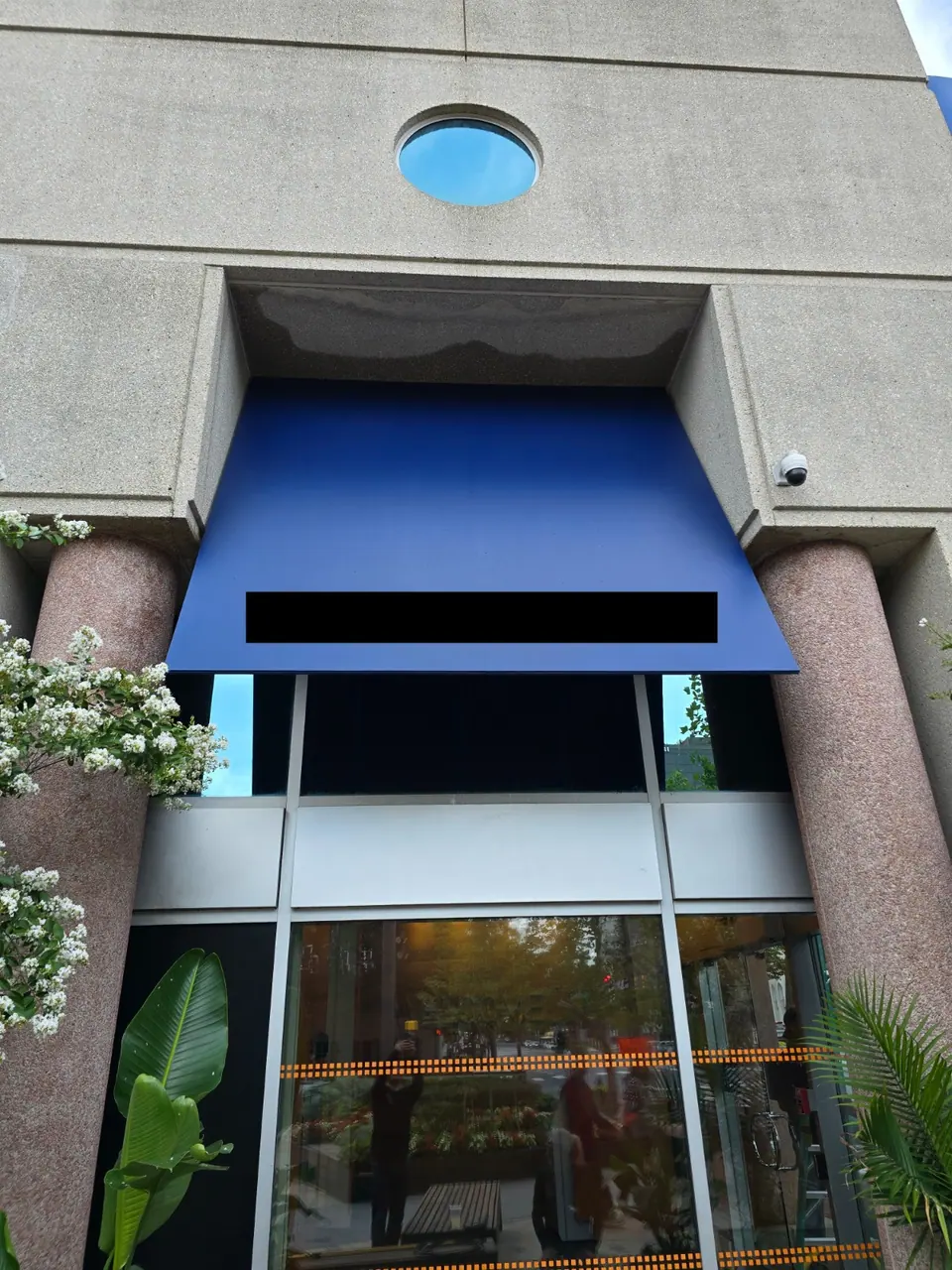
Before Pressure Washing a Commercial Awning
An awning is part of a larger storefront: fabric or metal, fixings, lettering, glazing and an entrance people still need to use. The cleaning method needs to account for all of it.
Identify the awning material and follow its manufacturer’s care requirements before agreeing a cleaning method. A pressure-washing enquiry should lead to a surface assessment, not an automatic high-pressure treatment.
Identify what is actually being cleaned
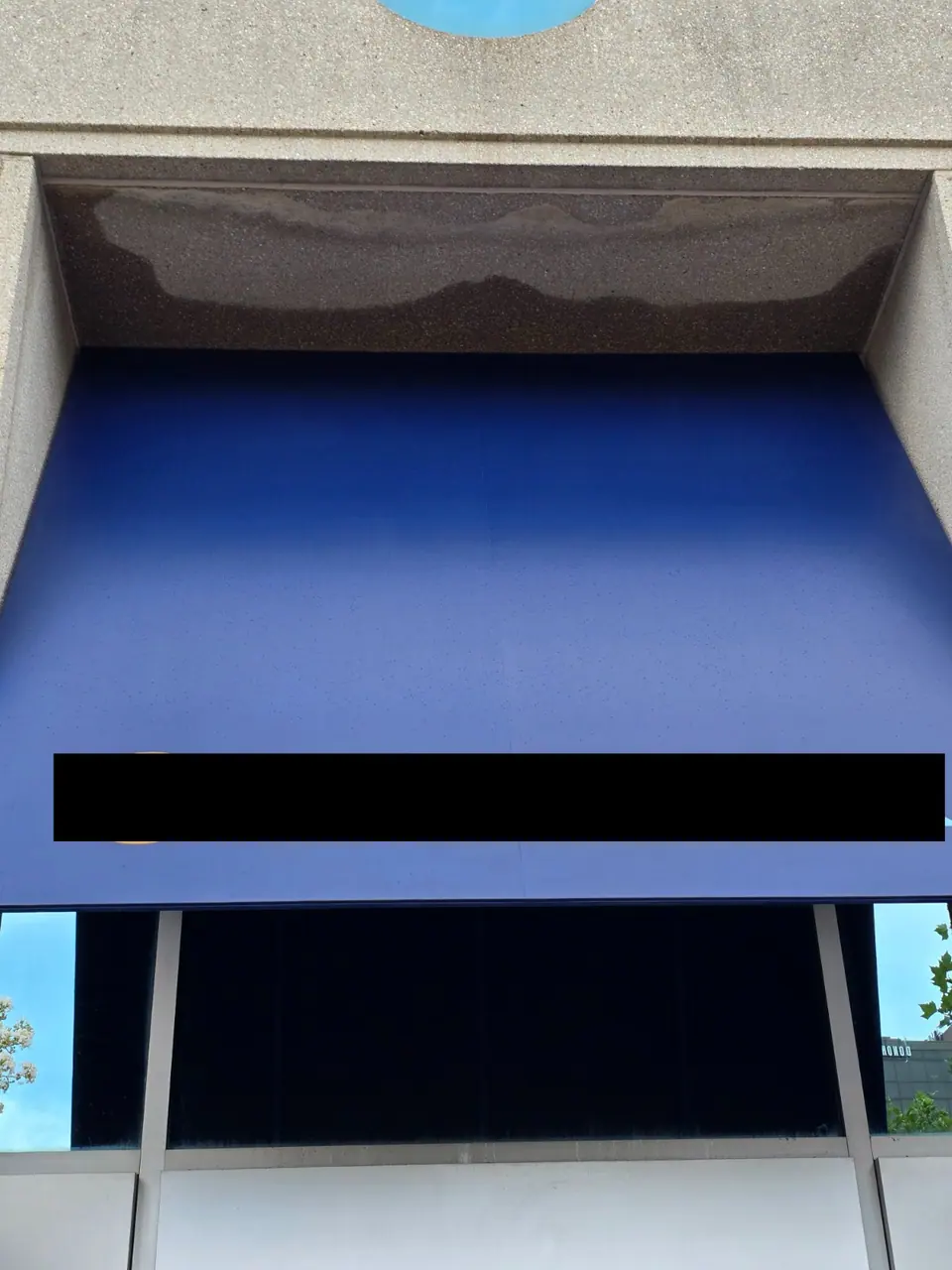
Gather the awning supplier’s details, fabric or material information and any care instructions. Include the frame, seams, graphics and adjacent surfaces in your photographs. If the material is unknown, say so; a photograph of a blue canopy does not establish its manufacturer or construction.
Note loose elements, damaged graphics, fading and previous repairs before discussing the cleaning result. Ask which conditions are likely to need repair or specialist evaluation. Cleaning should have its own scope, separate from any promise to restore the original color or correct physical damage.
Choose the method from the material
Sunbrella’s shade-fabric guidance, for example, describes light cleaning with suitable mild soap, a soft brush, thorough rinsing and air drying. That is product-specific guidance, not proof that a particular storefront awning is Sunbrella or that every canopy can use the same process.
Reference: Sunbrella: cleaning shade and awning fabrics ↗
- Ask how the material was identified and which guidance applies.
- Have the contractor explain the proposed cleaning approach.
- Discuss a discreet test area where appropriate.
- Agree how uncertain or damaged sections will be handled before work proceeds.
Look below and around the awning
A storefront assessment should include glazing, signs, electrical fixtures, neighboring premises and the route used by customers. Tell the provider about opening hours, deliveries and any equipment that cannot be moved. Decide who will communicate with tenants or neighboring businesses if access is affected.
Ask how the work area and wash water will be managed for that site, including any permissions the property requires. Do not assume the same arrangement suits a private loading area and an entrance opening directly onto a public sidewalk. The proposal should identify the plan and any dependencies.
Set a realistic appearance goal
Use the walkthrough to distinguish visible soil from fading, stains or wear that may remain. If before-and-after photos will be part of the handover, agree similar angles and lighting where practical. Photographs document the project; they should not hide unresolved conditions or be used to promise the same result at another building.
Finally, specify exactly what the quoted price includes. The top and underside of an awning, its frame, surrounding masonry and the entrance glass are separate areas of work. Confirm the weather plan, who can authorize changes and when the entrance can return to normal use.
Your planning checklist.
- Material, supplier and any available care guidance
- Condition photos covering fabric, frame and graphics
- Cleaning method and any proposed trial
- Customer access, adjoining surfaces and wash-water plan
- Included surfaces, weather arrangements and completion review
The best starting point is a material and access assessment. Equipment choice follows the surface and the site.
Put the plan into practice.
Explore the relevant service, then tell us about the property and the work you want to discuss.