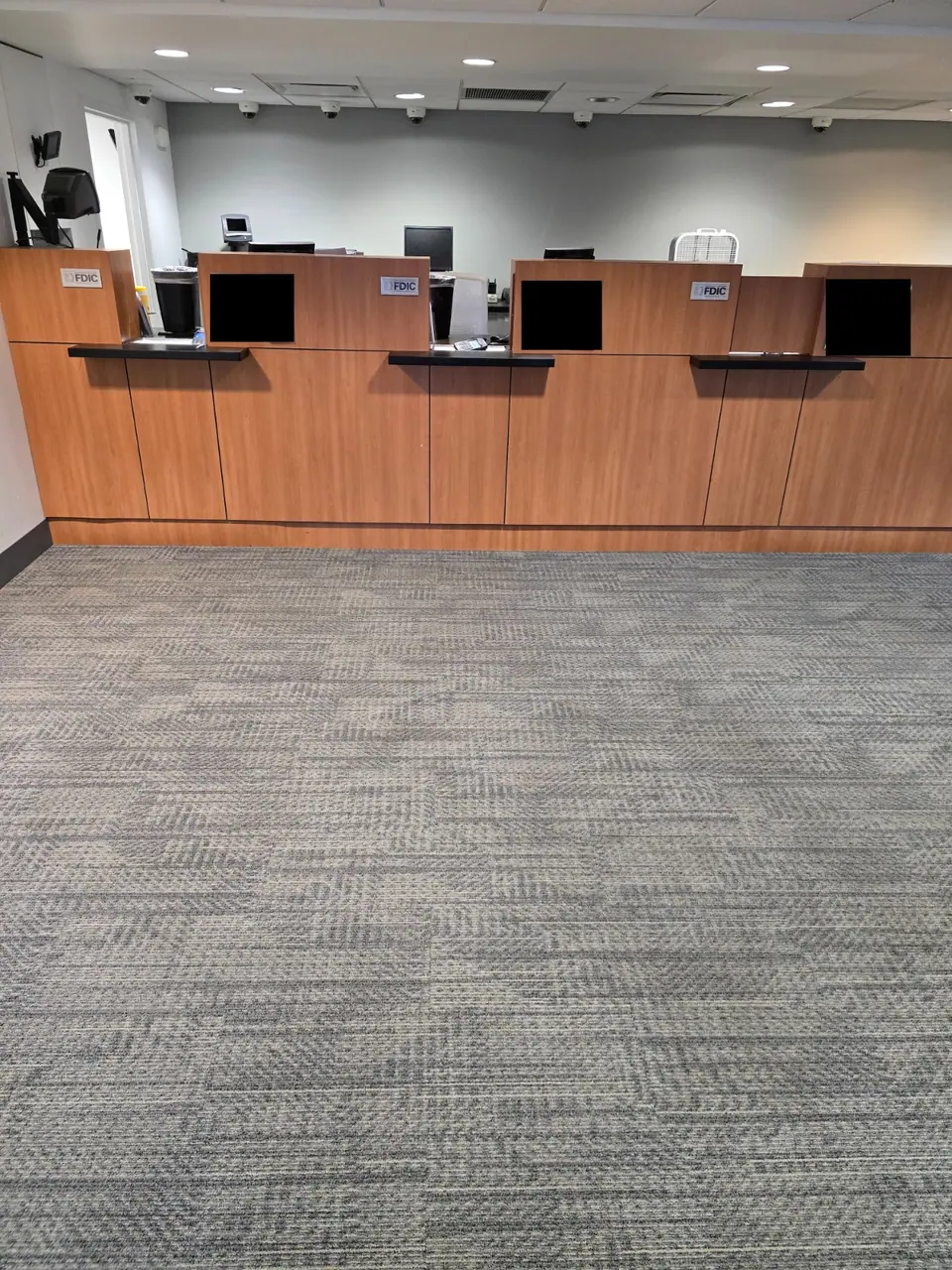
When Should Commercial Carpet Be Replaced Instead of Cleaned?
Cleaning removes soil. It does not rebuild worn fiber or repair a failing backing. Knowing which problem you have avoids paying for the wrong fix.
There is no fixed age at which office carpet must be replaced. Cleaning is worth trying first when the problem is soil or spots. Replacement becomes the question when the carpet itself is damaged: fiber worn through, seams or backing coming apart, ripples that return, or staining and odor that remain after proper cleaning.
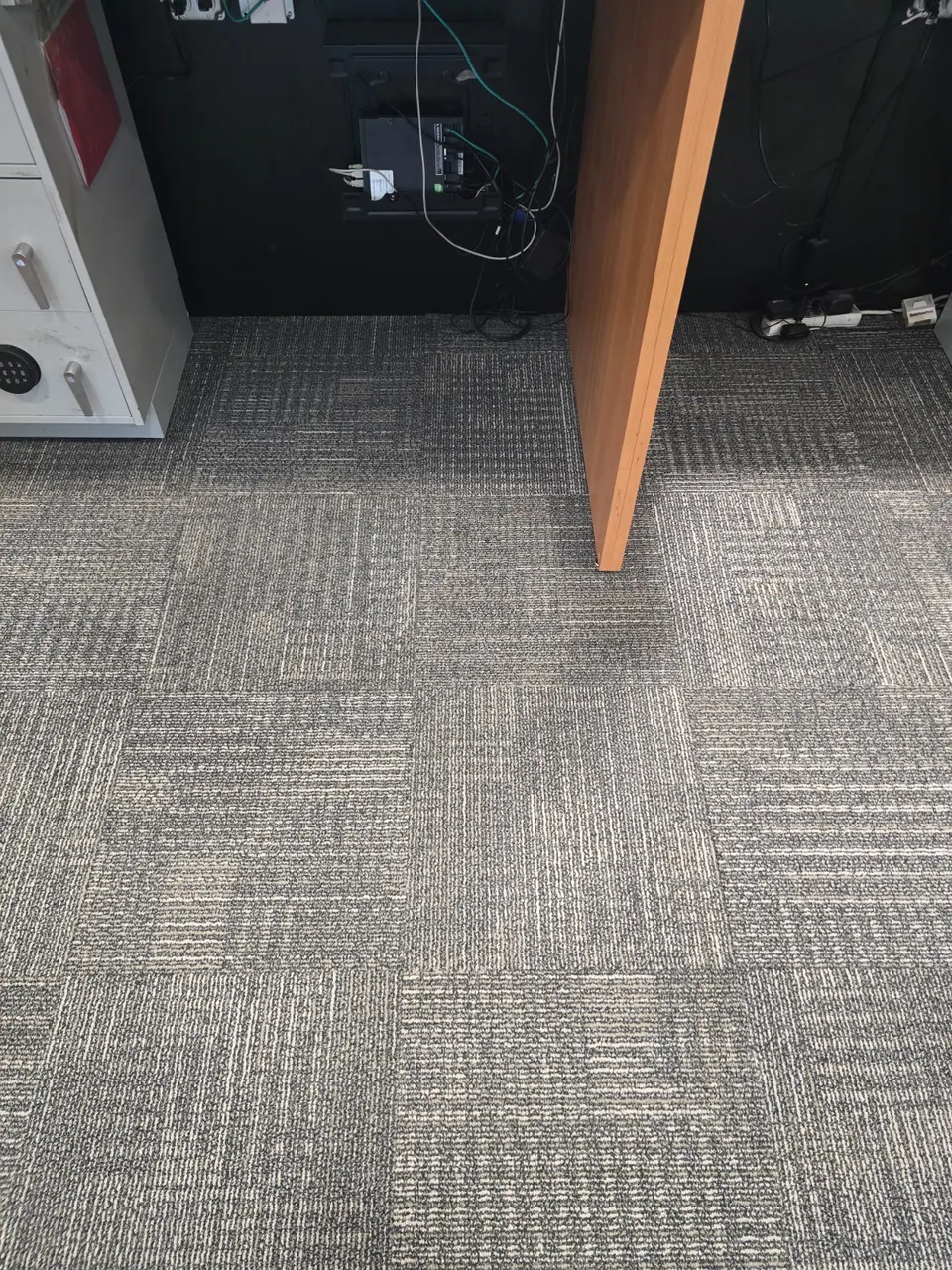
Separate soil from damage
A gray traffic lane can be embedded soil, which cleaning can remove, or fiber that has been crushed and worn, which it cannot. The two can look alike from standing height.
Ask for a small test area to be cleaned first. If the appearance recovers, the carpet needs maintenance. If the lane still shows after proper cleaning and drying, the fiber itself has changed. This is a practical check, not a laboratory test, and the result depends on the carpet and its history.
When cleaning should come first
Try cleaning before replacement when the complaints are about soil: visible dirt at entrances and in corridors, spots from drinks, or a dull look that has built up since the last deep clean. The Carpet and Rug Institute advises vacuuming on a schedule matched to traffic and periodic professional deep cleaning as part of normal care.
Reference: Carpet and Rug Institute: cleaning and maintenance ↗︎
A carpet that has gone a long time between deep cleans may need more than one visit before its condition is clear. Our guide to how often office and commercial carpets should be cleaned sets out published frequencies by traffic level.
Signs the carpet itself has reached the end
Replacement becomes the sensible question when the material is failing rather than dirty. Look for:
- Fiber worn thin, or backing visible in walkways and under chair casters
- Seams separating, edges fraying or carpet tiles lifting at the corners
- Ripples or buckles that return after being flattened, which can become a trip hazard
- Stains or color loss that remain after proper cleaning, such as bleach marks or sun fading
- Odor that persists after cleaning and drying, which can point to a problem beneath the carpet
Water damage, suspected mold or a problem in the subfloor needs its own assessment before any decision about the carpet.
Check the warranty and the lease
Find the carpet’s product information if you can. Manufacturer warranties can set maintenance conditions, so keep records of cleaning dates and methods. If the carpet is tile, ask the flooring supplier whether damaged sections can be replaced without redoing the whole floor.
Read the lease as well. Flooring replacement may be the landlord’s responsibility or the tenant’s, and the answer changes who approves the work and who pays for it.
Get both answers in writing
Ask a cleaning provider what cleaning can and cannot achieve in the affected areas, ideally after a test area. Ask a flooring contractor for a repair or replacement price for the same areas. With both in hand, the decision is a comparison of two written options rather than a guess.
Black Ops Cleaning offers a free on-site walkthrough for commercial carpet cleaning and agrees the scope in writing before work starts.
Your planning checklist.
- Carpet type, age if known and any warranty documents
- Areas of concern marked on a floor plan
- Photographs of wear, seams and stains
- Dates and methods of previous cleaning
- Lease terms that cover flooring
Clean what is dirty and replace what is worn. A cleaned test area helps tell the two apart.
Questions people ask.
How often should commercial carpet in an office be replaced?
There is no fixed interval. Service life depends on the product, the traffic it carries and how it has been maintained. Replace carpet when the material is failing, for example fiber worn through, separating seams or damage that cleaning cannot correct, and check the manufacturer’s warranty terms.
Can cleaning fix worn traffic lanes in office carpet?
Cleaning removes embedded soil, which is often part of what makes a traffic lane look gray. It cannot restore fiber that has been crushed or worn away. A cleaned test area shows how much of the problem is soil.
What are the signs that a commercial space needs professional carpet cleaning?
Visible soil at entrances and in corridors, spots that routine care has not removed, a dull or flattened look in walkways and a long gap since the last deep clean are the usual signs. Schedule cleaning by traffic level rather than waiting for the carpet to look dirty.
Put the plan into practice.
Explore the relevant service, then tell us about the property and the work you want to discuss.