Terrazzo Floor Care: Why It Is Different from VCT
When a building has several kinds of hard flooring, it is tempting to order one service for all of them. Terrazzo deserves its own assessment and a clearly named treatment.
Do not automatically apply a VCT strip-and-wax specification to terrazzo. Identify the terrazzo system and current finish, then distinguish routine cleaning, sealing, polishing and restoration in the proposal.

Start with the floor’s maintenance history
Ask the owner or facilities team for installation records, previous care instructions and the names of products already used. Record when the floor was last treated and what concerns have prompted the enquiry. A report of “lost shine” needs a closer description: is the change across the whole floor, limited to entrances or visible only around furniture?
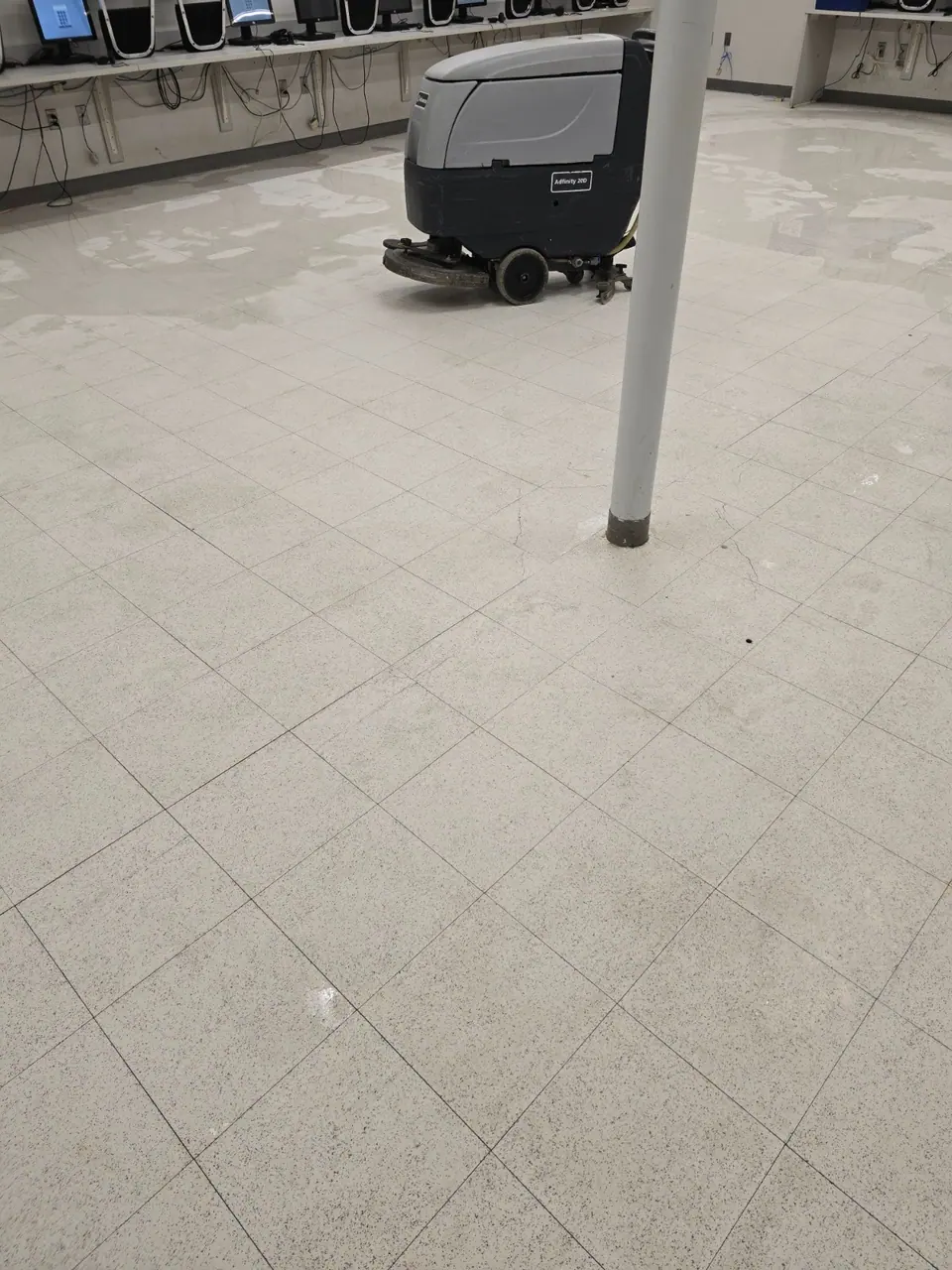
Photograph representative areas and make a list of visible cracks, marks and uneven appearance. Avoid deciding the cause from a photograph alone. The purpose of these records is to make the assessment more focused and preserve a reference for the agreed work.
Do not assume more wax is the answer
The National Terrazzo & Mosaic Association warns that wax and polishes can build up and dull terrazzo, and describes maintenance that may include appropriate resealing. Its guidance is a reason to question a routine VCT-style waxing proposal, rather than add another product without identifying the existing system.
Reference: National Terrazzo & Mosaic Association: terrazzo care FAQs ↗
- Confirm the terrazzo and any known surface treatment.
- Ask what the proposed process removes, preserves or adds.
- Identify which product or system guidance supports the recommendation.
- Have uncertain conditions assessed before a full treatment is agreed.
Use precise names for the work
Ask the provider to describe the proposed treatment in plain language. Does the quotation cover routine soil removal, attention to an existing coating, sealing or specialist mechanical restoration? The general phrase “floor polishing” is not enough to understand the work, disruption or price.
Repairs also need their own decision. A cleaning scope should state whether cracks, damaged areas or previous patching are being assessed, excluded or referred for specialist work. An appearance goal should not imply that cleaning will repair a physical defect.
Agree a sample and a care handover
Where an assessment calls for a trial, agree its location and who will review it. Look at the result in the building’s normal lighting and discuss any remaining variation. The trial can inform a decision; it should not become an undocumented promise that every area will respond identically.
Before approving the wider job, confirm the access plan and how occupants will move through the building. At handover, request the names of any products applied, the instructions relevant to future routine care and the contact for follow-up questions. Keep those records with the flooring information, so the next provider does not have to begin with guesswork.
Your planning checklist.
- Installation and maintenance records, where available
- Location of visible changes or damage
- A terrazzo-specific description of the proposed treatment
- Trial area and review arrangements, if recommended
- Written future care and reopening instructions
A useful terrazzo quotation explains the existing surface, the intended treatment and how the floor should be cared for afterward.
Put the plan into practice.
Explore the relevant service, then tell us about the property and the work you want to discuss.