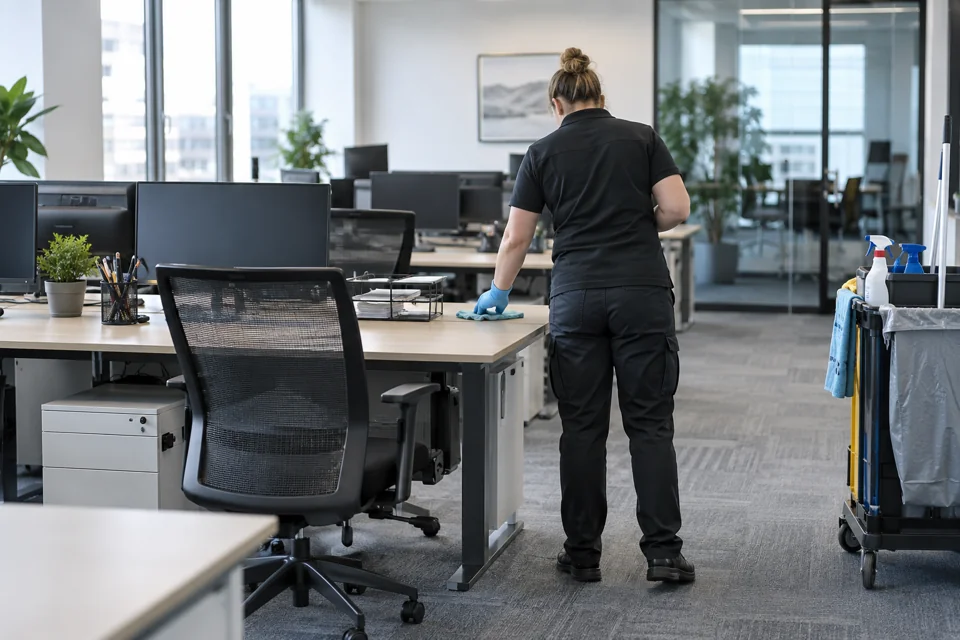
Office Cleaning Checklist: Daily, Weekly and Periodic Tasks
One number for the whole office rarely fits. Restrooms and kitchens set one rhythm, desks and meeting rooms another, and floors a third.
Split the checklist by frequency. In an office occupied every working day, restrooms, kitchens, bins and entrances usually need attention at every visit; dusting and detail work can be weekly; carpet extraction, hard-floor care and window cleaning are periodic. Set a frequency for each task, not one figure for the building.
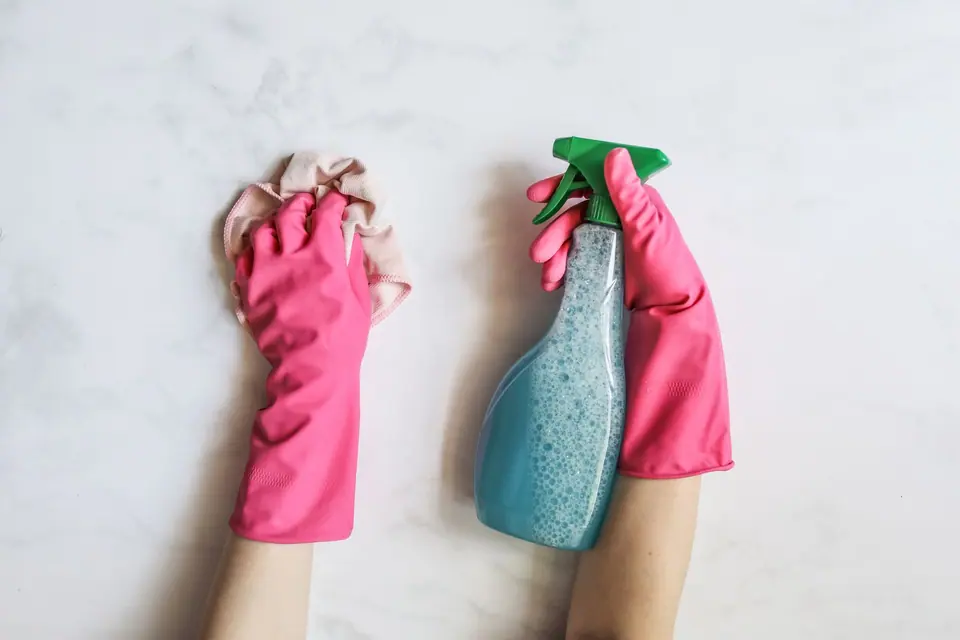
Every visit
These are the tasks that make the office ready for the next working day. The exact list belongs in your written scope; this is a common starting point.
- Restrooms: toilets, basins, mirrors and floors cleaned; soap and paper restocked
- Bins emptied and liners replaced
- Kitchen and break room: counters, sinks and tables wiped
- Reception and entrance: floors cleaned and glass doors spot-cleaned
- Floors vacuumed or mopped in the traffic areas
- Agreed high-touch points such as door handles and light switches
CDC guidance for community facilities advises cleaning high-touch surfaces regularly and notes that high-traffic areas may be cleaned more often.
Reference: CDC: when and how to clean and disinfect a facility ↗︎
Weekly
- Dusting of reachable surfaces, ledges and baseboards
- Detail vacuuming of edges, corners and under furniture where accessible
- Interior glass and partitions spot-cleaned
- Kitchen appliances wiped outside, and inside if agreed
- Cleared desks wiped, if agreed
Personal desks and equipment are often left to the occupant unless the scope says otherwise, so state which applies.
Periodic
- Carpet extraction, scheduled by traffic level
- Hard-floor care such as strip and wax or scrub and recoat
- Interior and exterior window cleaning
- High dusting of vents, ledges and light fittings
For the intervals, see our guides on carpet cleaning frequency and VCT floor care.
How often should the office be cleaned?
Start with people and rooms, not floor area. As illustrations only: a small suite with a few staff and no visitors might be served by one or two visits a week; an office with shared restrooms and a kitchen used daily usually needs a visit each working day; a medical practice follows its own facility protocols, as described under medical facility cleaning. The walkthrough sets the actual schedule for your property.
If the budget is fixed, protect the every-visit tasks first and move detail work to a weekly or periodic line, rather than thinning every task equally.
When the visits happen and how they are reviewed
Most office cleaning is done after the last person leaves or before the first arrives, so work areas are free. Black Ops Cleaning schedules cleaning appointments at any time, including after hours, and confirms availability directly.
Keep a simple log of requests and complaints for the first month. If the same room appears repeatedly, raise its frequency; if a task is done more often than the space needs, lower it. Record the change in the written scope so the schedule and the price stay matched.
Your planning checklist.
- Headcount, visitors and the busiest days
- Number of restrooms, kitchens and meeting rooms
- Tasks for every visit, weekly tasks and periodic work
- Preferred visit times and access arrangements
- Who reviews the work and how changes are requested
Frequency is a task-by-task decision. A checklist built that way is easier to price, check and adjust.
Questions people ask.
What should an office cleaning checklist include?
Tasks grouped by frequency: every-visit work such as restrooms, bins, kitchen surfaces and entrances; weekly dusting and detail work; and periodic carpet, floor and window care. Add who supplies consumables and how the work is reviewed.
How often should an office be cleaned?
It depends on headcount and how the rooms are used. Where restrooms, kitchens and reception are used every working day, those tasks usually need attention at each visit; dusting and detail work can be weekly, and carpet, floor and window care are periodic.
How often should high-touch surfaces in an office be cleaned?
CDC guidance for community facilities advises cleaning high-touch surfaces regularly, and more often in high-traffic areas. It recommends disinfecting areas where people have obviously been ill and says that regular cleaning is enough in most situations.
Put the plan into practice.
Explore the relevant service, then tell us about the property and the work you want to discuss.